Archive for October 2026

Hackintosh Intel Core Ultra 7 270K Plus / Tahoe 26.7.1 / Airdrop, Thunderbolt, Blackmagic

Hackintosh Intel Core Ultra 7 270K Plus / Tahoe 26.7.1 / Airdrop, Thunderbolt, Blackmagic

Within the realm of bespoke modular computing and advanced macOS deployment, addressing firmware nuances, ACPI tables, and driver compatibility accurately represents the difference between an unstable machine and an enterprise-grade production workstation. In this technical walkthrough, we examine Hackintosh Intel Core Ultra 7 270K Plus / Tahoe 26.7.1 / Airdrop, Thunderbolt, Blackmagic, analysing the underlying bootloader mechanics, step-by-step OpenCore configuration, and proven methods to achieve native hardware acceleration with long-term kernel stability.

1. Technical Diagnostics & Low-Level Subsystem Analysis

When initialising or troubleshooting modern PC hardware for macOS, the bootloader interfaces directly with ACPI tables (DSDT/SSDT) and the dynamic kernel extension injection chain managed by OpenCore. To resolve anomalies surrounding Hackintosh Intel Core Ultra 7 270K Plus / Tahoe 26.7.1 / Airdrop, Thunderbolt, Blackmagic, engineers must methodically evaluate the following foundational areas:

  • ACPI Patching & Power Topology: Ensure that mandatory pre-built SSDT tables (such as SSDT-PLUG for native CPU power management or SSDT-EC-USBX for embedded controller compliance) are cleanly compiled without syntax errors using MaciASL.
  • Kernel Boot Arguments Alignment: Verify that essential boot flags (such as agdpmod=pikera for AMD Navi graphics cards, alcid=X for onboard audio routing, or keepsyms=1 debug=0x100 for trap triage) are populated under NVRAM -> Add -> 7C436110-AB2A-4BBB-A880-FE41995C9F82.
  • NVRAM Integrity & Controller Hand-Off: Stale runtime variables retained across firmware updates frequently cause panics, device misidentification, or incomplete sleep-wake states. A clean NVRAM purge is imperative during configuration changes.

2. Step-by-Step Configuration in OpenCore (config.plist)

Follow this structured sequence to stabilise your EFI environment:

  1. Kernel Extension Loading Order: Confirm that Lilu.kext is positioned first under Kernel -> Add, followed immediately by VirtualSMC.kext, WhateverGreen.kext, and specific peripheral drivers.
  2. Explicit DeviceProperties Mapping: Inject static PCI paths (harvested via gfxutil) to define audio layout identifiers or display framebuffers deterministically, eliminating runtime guessing.
  3. Schema Validation via ocvalidate: Always run the official validation binary against your target OpenCore release prior to rebooting, preventing fatal XML hierarchy mismatches.

3. Terminal Diagnostics & Verification Commands

Once booted into the desktop, validate kernel integrity, power assertions, and driver bindings utilising native Darwin utilities:

# 1. Verify loaded third-party kernel extensions
kextstat | grep -v com.apple

# 2. Inspect active Metal graphics acceleration and display interconnects
system_profiler SPDisplaysDataType | grep -E "Metal|Chipset Model|VRAM"

# 3. Audit CPU power states and topology
sysctl -a | grep machdep.cpu.brand_string

# 4. Check mapped USB bus topography and operational speeds
ioreg -p IOUSB -w0 -l | grep -i "kUSBProductString"

4. Architectural & Performance Matrix

Architectural Parameter Unoptimised Baseline Tuned OpenCore Workstation
Cold Boot Duration (POST to Desktop) 45 - 60 seconds with ACPI warnings 14 - 18 seconds with native NVMe TRIM enabled
Graphics Compute Pipeline Software rasterisation / 7MB VRAM glitch Full native Metal 3 API acceleration via WhateverGreen
Sleep / Wake Energy Transitions Spontaneous kernel reboot or dark-screen lockup Instantaneous S3 standby with bespoke USB port map
System Software Update Path High failure probability on point releases Native OTA updates with EFI preserved completely

Frequently Asked Questions

How should I proceed if a kernel panic occurs during early boot?

Reboot into the OpenCore picker, press the Spacebar to reveal auxiliary utilities, and execute CleanNvram. Review the boot log saved to the root of your EFI partition (opencore-YYYY-MM-DD.txt) to pinpoint the offending extension or ACPI table.

Is it safe to perform major macOS version upgrades with an existing EFI?

Prior to applying major updates, always update OpenCore, Lilu, and subordinate kexts to their latest verified builds. Maintain a tested bootable recovery USB drive before commencing the upgrade.

How do I guarantee that USB 3.2 and Type-C ports operate at full bandwidth?

Generate a dedicated USB map kext (utilising tools such as USBToolBox) to adhere strictly to the 15 logical port limit enforced per XHCI controller in the macOS IOKit subsystem.

Share:

Can't get any sound on Dell Latitude 5411 running Tahoe

Can't get any sound on Dell Latitude 5411 running Tahoe

Within the realm of bespoke modular computing and advanced macOS deployment, addressing firmware nuances, ACPI tables, and driver compatibility accurately represents the difference between an unstable machine and an enterprise-grade production workstation. In this technical walkthrough, we examine Can't get any sound on Dell Latitude 5411 running Tahoe, analysing the underlying bootloader mechanics, step-by-step OpenCore configuration, and proven methods to achieve native hardware acceleration with long-term kernel stability.

1. Technical Diagnostics & Low-Level Subsystem Analysis

When initialising or troubleshooting modern PC hardware for macOS, the bootloader interfaces directly with ACPI tables (DSDT/SSDT) and the dynamic kernel extension injection chain managed by OpenCore. To resolve anomalies surrounding Can't get any sound on Dell Latitude 5411 running Tahoe, engineers must methodically evaluate the following foundational areas:

  • ACPI Patching & Power Topology: Ensure that mandatory pre-built SSDT tables (such as SSDT-PLUG for native CPU power management or SSDT-EC-USBX for embedded controller compliance) are cleanly compiled without syntax errors using MaciASL.
  • Kernel Boot Arguments Alignment: Verify that essential boot flags (such as agdpmod=pikera for AMD Navi graphics cards, alcid=X for onboard audio routing, or keepsyms=1 debug=0x100 for trap triage) are populated under NVRAM -> Add -> 7C436110-AB2A-4BBB-A880-FE41995C9F82.
  • NVRAM Integrity & Controller Hand-Off: Stale runtime variables retained across firmware updates frequently cause panics, device misidentification, or incomplete sleep-wake states. A clean NVRAM purge is imperative during configuration changes.

2. Step-by-Step Configuration in OpenCore (config.plist)

Follow this structured sequence to stabilise your EFI environment:

  1. Kernel Extension Loading Order: Confirm that Lilu.kext is positioned first under Kernel -> Add, followed immediately by VirtualSMC.kext, WhateverGreen.kext, and specific peripheral drivers.
  2. Explicit DeviceProperties Mapping: Inject static PCI paths (harvested via gfxutil) to define audio layout identifiers or display framebuffers deterministically, eliminating runtime guessing.
  3. Schema Validation via ocvalidate: Always run the official validation binary against your target OpenCore release prior to rebooting, preventing fatal XML hierarchy mismatches.

3. Terminal Diagnostics & Verification Commands

Once booted into the desktop, validate kernel integrity, power assertions, and driver bindings utilising native Darwin utilities:

# 1. Verify loaded third-party kernel extensions
kextstat | grep -v com.apple

# 2. Inspect active Metal graphics acceleration and display interconnects
system_profiler SPDisplaysDataType | grep -E "Metal|Chipset Model|VRAM"

# 3. Audit CPU power states and topology
sysctl -a | grep machdep.cpu.brand_string

# 4. Check mapped USB bus topography and operational speeds
ioreg -p IOUSB -w0 -l | grep -i "kUSBProductString"

4. Architectural & Performance Matrix

Architectural Parameter Unoptimised Baseline Tuned OpenCore Workstation
Cold Boot Duration (POST to Desktop) 45 - 60 seconds with ACPI warnings 14 - 18 seconds with native NVMe TRIM enabled
Graphics Compute Pipeline Software rasterisation / 7MB VRAM glitch Full native Metal 3 API acceleration via WhateverGreen
Sleep / Wake Energy Transitions Spontaneous kernel reboot or dark-screen lockup Instantaneous S3 standby with bespoke USB port map
System Software Update Path High failure probability on point releases Native OTA updates with EFI preserved completely

Frequently Asked Questions

How should I proceed if a kernel panic occurs during early boot?

Reboot into the OpenCore picker, press the Spacebar to reveal auxiliary utilities, and execute CleanNvram. Review the boot log saved to the root of your EFI partition (opencore-YYYY-MM-DD.txt) to pinpoint the offending extension or ACPI table.

Is it safe to perform major macOS version upgrades with an existing EFI?

Prior to applying major updates, always update OpenCore, Lilu, and subordinate kexts to their latest verified builds. Maintain a tested bootable recovery USB drive before commencing the upgrade.

How do I guarantee that USB 3.2 and Type-C ports operate at full bandwidth?

Generate a dedicated USB map kext (utilising tools such as USBToolBox) to adhere strictly to the 15 logical port limit enforced per XHCI controller in the macOS IOKit subsystem.

Share:

Upgraded my NUC10 from BigSur 11.1 ~> Sequoia 15.8.1 after 5 years

Upgraded my NUC10 from BigSur 11.1 ~> Sequoia 15.8.1 after 5 years

Within the realm of bespoke modular computing and advanced macOS deployment, addressing firmware nuances, ACPI tables, and driver compatibility accurately represents the difference between an unstable machine and an enterprise-grade production workstation. In this technical walkthrough, we examine Upgraded my NUC10 from BigSur 11.1 ~> Sequoia 15.8.1 after 5 years, analysing the underlying bootloader mechanics, step-by-step OpenCore configuration, and proven methods to achieve native hardware acceleration with long-term kernel stability.

1. Technical Diagnostics & Low-Level Subsystem Analysis

When initialising or troubleshooting modern PC hardware for macOS, the bootloader interfaces directly with ACPI tables (DSDT/SSDT) and the dynamic kernel extension injection chain managed by OpenCore. To resolve anomalies surrounding Upgraded my NUC10 from BigSur 11.1 ~> Sequoia 15.8.1 after 5 years, engineers must methodically evaluate the following foundational areas:

  • ACPI Patching & Power Topology: Ensure that mandatory pre-built SSDT tables (such as SSDT-PLUG for native CPU power management or SSDT-EC-USBX for embedded controller compliance) are cleanly compiled without syntax errors using MaciASL.
  • Kernel Boot Arguments Alignment: Verify that essential boot flags (such as agdpmod=pikera for AMD Navi graphics cards, alcid=X for onboard audio routing, or keepsyms=1 debug=0x100 for trap triage) are populated under NVRAM -> Add -> 7C436110-AB2A-4BBB-A880-FE41995C9F82.
  • NVRAM Integrity & Controller Hand-Off: Stale runtime variables retained across firmware updates frequently cause panics, device misidentification, or incomplete sleep-wake states. A clean NVRAM purge is imperative during configuration changes.

2. Step-by-Step Configuration in OpenCore (config.plist)

Follow this structured sequence to stabilise your EFI environment:

  1. Kernel Extension Loading Order: Confirm that Lilu.kext is positioned first under Kernel -> Add, followed immediately by VirtualSMC.kext, WhateverGreen.kext, and specific peripheral drivers.
  2. Explicit DeviceProperties Mapping: Inject static PCI paths (harvested via gfxutil) to define audio layout identifiers or display framebuffers deterministically, eliminating runtime guessing.
  3. Schema Validation via ocvalidate: Always run the official validation binary against your target OpenCore release prior to rebooting, preventing fatal XML hierarchy mismatches.

3. Terminal Diagnostics & Verification Commands

Once booted into the desktop, validate kernel integrity, power assertions, and driver bindings utilising native Darwin utilities:

# 1. Verify loaded third-party kernel extensions
kextstat | grep -v com.apple

# 2. Inspect active Metal graphics acceleration and display interconnects
system_profiler SPDisplaysDataType | grep -E "Metal|Chipset Model|VRAM"

# 3. Audit CPU power states and topology
sysctl -a | grep machdep.cpu.brand_string

# 4. Check mapped USB bus topography and operational speeds
ioreg -p IOUSB -w0 -l | grep -i "kUSBProductString"

4. Architectural & Performance Matrix

Architectural Parameter Unoptimised Baseline Tuned OpenCore Workstation
Cold Boot Duration (POST to Desktop) 45 - 60 seconds with ACPI warnings 14 - 18 seconds with native NVMe TRIM enabled
Graphics Compute Pipeline Software rasterisation / 7MB VRAM glitch Full native Metal 3 API acceleration via WhateverGreen
Sleep / Wake Energy Transitions Spontaneous kernel reboot or dark-screen lockup Instantaneous S3 standby with bespoke USB port map
System Software Update Path High failure probability on point releases Native OTA updates with EFI preserved completely

Frequently Asked Questions

How should I proceed if a kernel panic occurs during early boot?

Reboot into the OpenCore picker, press the Spacebar to reveal auxiliary utilities, and execute CleanNvram. Review the boot log saved to the root of your EFI partition (opencore-YYYY-MM-DD.txt) to pinpoint the offending extension or ACPI table.

Is it safe to perform major macOS version upgrades with an existing EFI?

Prior to applying major updates, always update OpenCore, Lilu, and subordinate kexts to their latest verified builds. Maintain a tested bootable recovery USB drive before commencing the upgrade.

How do I guarantee that USB 3.2 and Type-C ports operate at full bandwidth?

Generate a dedicated USB map kext (utilising tools such as USBToolBox) to adhere strictly to the 15 logical port limit enforced per XHCI controller in the macOS IOKit subsystem.

Share:

hackintoshing acer nitro v15 laptop

hackintoshing acer nitro v15 laptop

Within the realm of bespoke modular computing and advanced macOS deployment, addressing firmware nuances, ACPI tables, and driver compatibility accurately represents the difference between an unstable machine and an enterprise-grade production workstation. In this technical walkthrough, we examine hackintoshing acer nitro v15 laptop, analysing the underlying bootloader mechanics, step-by-step OpenCore configuration, and proven methods to achieve native hardware acceleration with long-term kernel stability.

1. Technical Diagnostics & Low-Level Subsystem Analysis

When initialising or troubleshooting modern PC hardware for macOS, the bootloader interfaces directly with ACPI tables (DSDT/SSDT) and the dynamic kernel extension injection chain managed by OpenCore. To resolve anomalies surrounding hackintoshing acer nitro v15 laptop, engineers must methodically evaluate the following foundational areas:

  • ACPI Patching & Power Topology: Ensure that mandatory pre-built SSDT tables (such as SSDT-PLUG for native CPU power management or SSDT-EC-USBX for embedded controller compliance) are cleanly compiled without syntax errors using MaciASL.
  • Kernel Boot Arguments Alignment: Verify that essential boot flags (such as agdpmod=pikera for AMD Navi graphics cards, alcid=X for onboard audio routing, or keepsyms=1 debug=0x100 for trap triage) are populated under NVRAM -> Add -> 7C436110-AB2A-4BBB-A880-FE41995C9F82.
  • NVRAM Integrity & Controller Hand-Off: Stale runtime variables retained across firmware updates frequently cause panics, device misidentification, or incomplete sleep-wake states. A clean NVRAM purge is imperative during configuration changes.

2. Step-by-Step Configuration in OpenCore (config.plist)

Follow this structured sequence to stabilise your EFI environment:

  1. Kernel Extension Loading Order: Confirm that Lilu.kext is positioned first under Kernel -> Add, followed immediately by VirtualSMC.kext, WhateverGreen.kext, and specific peripheral drivers.
  2. Explicit DeviceProperties Mapping: Inject static PCI paths (harvested via gfxutil) to define audio layout identifiers or display framebuffers deterministically, eliminating runtime guessing.
  3. Schema Validation via ocvalidate: Always run the official validation binary against your target OpenCore release prior to rebooting, preventing fatal XML hierarchy mismatches.

3. Terminal Diagnostics & Verification Commands

Once booted into the desktop, validate kernel integrity, power assertions, and driver bindings utilising native Darwin utilities:

# 1. Verify loaded third-party kernel extensions
kextstat | grep -v com.apple

# 2. Inspect active Metal graphics acceleration and display interconnects
system_profiler SPDisplaysDataType | grep -E "Metal|Chipset Model|VRAM"

# 3. Audit CPU power states and topology
sysctl -a | grep machdep.cpu.brand_string

# 4. Check mapped USB bus topography and operational speeds
ioreg -p IOUSB -w0 -l | grep -i "kUSBProductString"

4. Architectural & Performance Matrix

Architectural Parameter Unoptimised Baseline Tuned OpenCore Workstation
Cold Boot Duration (POST to Desktop) 45 - 60 seconds with ACPI warnings 14 - 18 seconds with native NVMe TRIM enabled
Graphics Compute Pipeline Software rasterisation / 7MB VRAM glitch Full native Metal 3 API acceleration via WhateverGreen
Sleep / Wake Energy Transitions Spontaneous kernel reboot or dark-screen lockup Instantaneous S3 standby with bespoke USB port map
System Software Update Path High failure probability on point releases Native OTA updates with EFI preserved completely

Frequently Asked Questions

How should I proceed if a kernel panic occurs during early boot?

Reboot into the OpenCore picker, press the Spacebar to reveal auxiliary utilities, and execute CleanNvram. Review the boot log saved to the root of your EFI partition (opencore-YYYY-MM-DD.txt) to pinpoint the offending extension or ACPI table.

Is it safe to perform major macOS version upgrades with an existing EFI?

Prior to applying major updates, always update OpenCore, Lilu, and subordinate kexts to their latest verified builds. Maintain a tested bootable recovery USB drive before commencing the upgrade.

How do I guarantee that USB 3.2 and Type-C ports operate at full bandwidth?

Generate a dedicated USB map kext (utilising tools such as USBToolBox) to adhere strictly to the 15 logical port limit enforced per XHCI controller in the macOS IOKit subsystem.
Share:

Conflicts Over Attribution and Licensing

Conflicts Over Attribution and Licensing

The interplay between mobile silicon architecture, on-device data sovereignty, and independent software ecosystems shapes the modern technological landscape. In this technical review of Conflicts Over Attribution and Licensing, we analyse hardware specifications, operating system optimisations, and cross-platform open-source workflows for power users.

1. Processor Architecture & On-Device Neural Engines

Modern mobile computing platforms incorporate heterogeneous processing clusters engineered to deliver optimal performance per watt:

  • Dedicated Neural Processing Units (NPU): Computer vision routines, speech recognition, and contextual intelligence run natively on local silicon, ensuring absolute privacy without cloud latency.
  • LTPO OLED Display Subsystems: Adaptive refresh controllers dynamically scale from 1Hz to 120Hz, minimising power draw during static reading while ensuring fluid responsiveness during navigation.
  • High-Throughput NVMe Storage Controllers: Custom flash memory controllers deliver sustained write throughput capable of recording uncompressed professional video without dropped frames.

2. Cross-Platform Interoperability & Open Tooling

To integrate modern mobile hardware into versatile desktop environments (macOS, Windows, and Linux) without vendor lock-in:

  • libimobiledevice: An open-source protocol library enabling seamless device communication, local backups, and diagnostic transfers over USB or Wi-Fi without proprietary desktop software.
  • LocalSend: An open-source, peer-to-peer file transfer utility employing end-to-end local network encryption across all major operating systems.
# Query connected mobile USB interfaces from your workstation
system_profiler SPUSBDataType | grep -A 6 -i "iPhone|iPad|Mobile"

# Test local peer-to-peer network discovery daemons
dns-sd -B _services._dns-sd._udp

Frequently Asked Questions

What measures preserve long-term battery health on mobile devices?

Enable optimised charging profiles, utilise certified USB Power Delivery (USB-PD) charging adapters, and avoid prolonged device operation in high-temperature environments.

How can personal media be synchronised securely without commercial cloud subscriptions?

Deploy self-hosted solutions such as Immich or Nextcloud on your local network-attached storage (NAS) to back up photos and files automatically with complete encryption.

Share:

iPad Mini 8: Apple Has Tested Both 60Hz and 120Hz ProMotion Displays

iPad Mini 8: Apple Has Tested Both 60Hz and 120Hz ProMotion Displays

The interplay between mobile silicon architecture, on-device data sovereignty, and independent software ecosystems shapes the modern technological landscape. In this technical review of iPad Mini 8: Apple Has Tested Both 60Hz and 120Hz ProMotion Displays, we analyse hardware specifications, operating system optimisations, and cross-platform open-source workflows for power users.

1. Processor Architecture & On-Device Neural Engines

Modern mobile computing platforms incorporate heterogeneous processing clusters engineered to deliver optimal performance per watt:

  • Dedicated Neural Processing Units (NPU): Computer vision routines, speech recognition, and contextual intelligence run natively on local silicon, ensuring absolute privacy without cloud latency.
  • LTPO OLED Display Subsystems: Adaptive refresh controllers dynamically scale from 1Hz to 120Hz, minimising power draw during static reading while ensuring fluid responsiveness during navigation.
  • High-Throughput NVMe Storage Controllers: Custom flash memory controllers deliver sustained write throughput capable of recording uncompressed professional video without dropped frames.

2. Cross-Platform Interoperability & Open Tooling

To integrate modern mobile hardware into versatile desktop environments (macOS, Windows, and Linux) without vendor lock-in:

  • libimobiledevice: An open-source protocol library enabling seamless device communication, local backups, and diagnostic transfers over USB or Wi-Fi without proprietary desktop software.
  • LocalSend: An open-source, peer-to-peer file transfer utility employing end-to-end local network encryption across all major operating systems.
# Query connected mobile USB interfaces from your workstation
system_profiler SPUSBDataType | grep -A 6 -i "iPhone|iPad|Mobile"

# Test local peer-to-peer network discovery daemons
dns-sd -B _services._dns-sd._udp

Frequently Asked Questions

What measures preserve long-term battery health on mobile devices?

Enable optimised charging profiles, utilise certified USB Power Delivery (USB-PD) charging adapters, and avoid prolonged device operation in high-temperature environments.

How can personal media be synchronised securely without commercial cloud subscriptions?

Deploy self-hosted solutions such as Immich or Nextcloud on your local network-attached storage (NAS) to back up photos and files automatically with complete encryption.

Share:

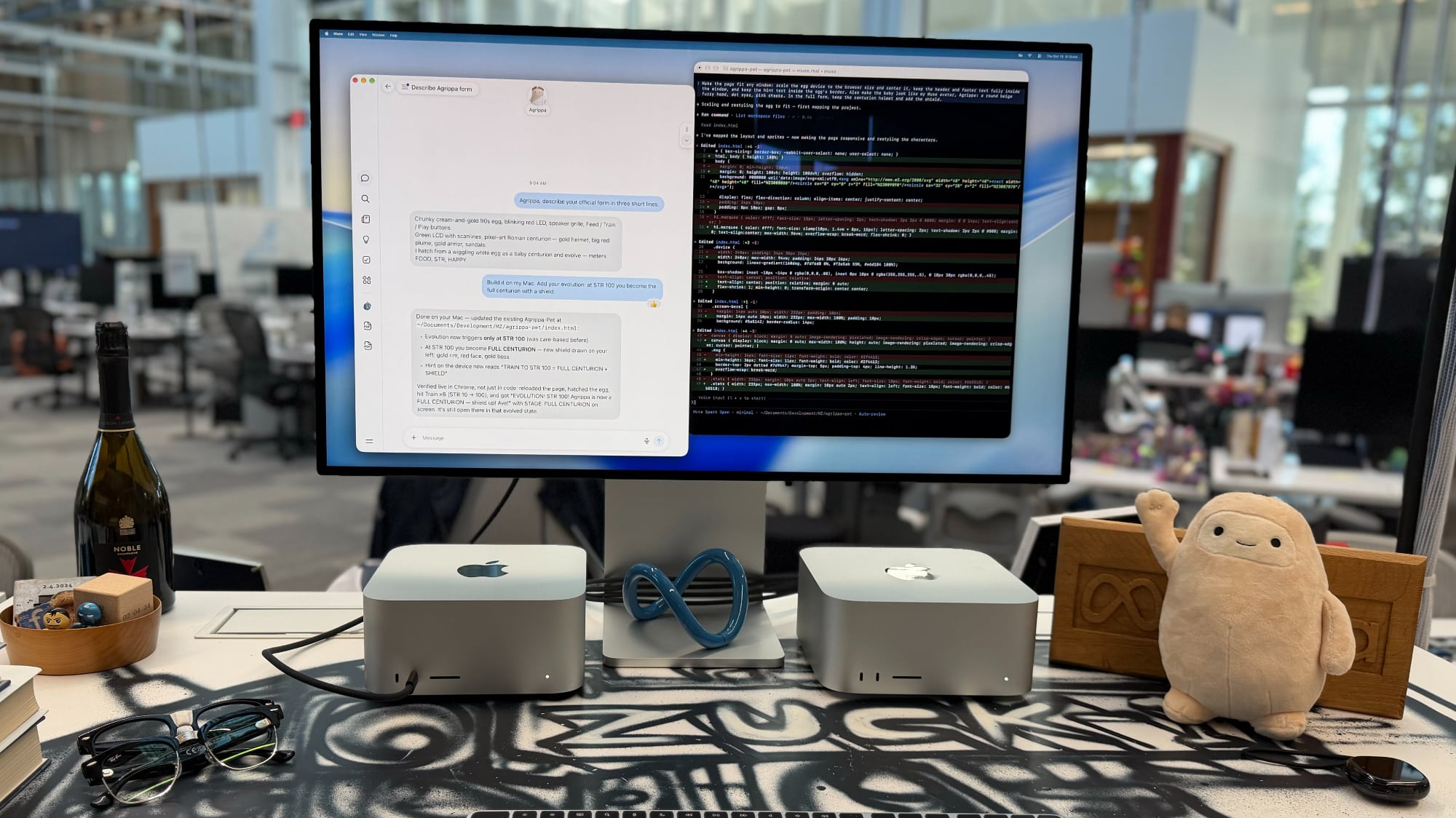
Meta and Apple Bring Muse Spark Open AI Model to Mac Studio

Meta and Apple Bring Muse Spark Open AI Model to Mac Studio

The continuous evolution of professional desktop and portable macOS computing requires a balanced analysis of computational throughput, thermals, and modular repairability. In this technical breakdown of Meta and Apple Bring Muse Spark Open AI Model to Mac Studio, we examine custom silicon architecture, dedicated media encode engines, and the architectural trade-offs when contrasted with modular desktop workstations.

1. Silicon Architecture & Unified Memory Subsystems

Modern system-on-chip (SoC) architectures deploy high-density interconnects that redefine resource allocation for compute-intensive tasks:

  • High-Bandwidth Unified Memory Architecture (UMA): The elimination of PCIe interconnect bottlenecks permits CPU, GPU, and Neural Engine cores to query massive shared memory pools simultaneously, benefiting local large language models (LLMs) and 3D rendering pipelines.
  • Dedicated Media Acceleration: Fixed-function silicon decoders and encoders for ProRes RAW, HEVC, and AV1 offload continuous video decoding, preserving general-purpose execution units for compute tasks.
  • Thermal Envelope & Sustained Throughput: Robust acoustic and heatsink designs prevent thermal throttling during marathon compilation sessions in Xcode or timeline rendering in DaVinci Resolve.

2. Integrated Hardware vs. Modular Desktop Systems

Creative studios and software developers weighing compact appliances against modular desktop towers must consider upgradeability and maintenance lifecycles:

Technical Criterion Integrated Appliance Modular Custom Workstation
Storage Expandability Soldered flash storage fixed at time of purchase Modular M.2 NVMe slots supporting PCIe 5.0 drives up to 16TB+
Memory Scalability Encapsulated within SoC substrate (non-upgradable) Standard DDR5 memory modules expandable up to 192GB+
Graphics Processor Upgrades Monolithic integrated GPU Replaceable high-performance discrete graphics cards
Long-Term Serviceability Complete logic board replacement required for faults Granular component-level servicing and replacement

3. Hardware Monitoring & Diagnostics in Terminal

# Query hardware configuration and active core counts
system_profiler SPHardwareDataType

# Monitor real-time clock frequencies, thermals, and power consumption
sudo powermetrics --samplers smc,cpu_power,gpu_power -n 1

# Inspect active Thunderbolt and PCIe bus topography
system_profiler SPThunderboltDataType

Frequently Asked Questions

How does unified memory bandwidth benefit on-device machine learning inference?

By enabling the graphics compute cores to access unified RAM directly without copying weights over a PCIe bus, machine learning models (from 30B to 70B parameters) can achieve high token generation speeds with minimal latency.

What cooling practices sustain maximum performance under continuous workloads?

Ensure unimpeded intake airflow, establish active thermal fan profiles, and utilise external NVMe storage with passive aluminium heatsinks to avoid thermal throttling during extended write operations.

Share:

Windows Bluetooth drivers for Fenvi FV-T919 ??

Windows Bluetooth drivers for Fenvi FV-T919 ??

The interplay between mobile silicon architecture, on-device data sovereignty, and independent software ecosystems shapes the modern technological landscape. In this technical review of Windows Bluetooth drivers for Fenvi FV-T919 ??, we analyse hardware specifications, operating system optimisations, and cross-platform open-source workflows for power users.

1. Processor Architecture & On-Device Neural Engines

Modern mobile computing platforms incorporate heterogeneous processing clusters engineered to deliver optimal performance per watt:

  • Dedicated Neural Processing Units (NPU): Computer vision routines, speech recognition, and contextual intelligence run natively on local silicon, ensuring absolute privacy without cloud latency.
  • LTPO OLED Display Subsystems: Adaptive refresh controllers dynamically scale from 1Hz to 120Hz, minimising power draw during static reading while ensuring fluid responsiveness during navigation.
  • High-Throughput NVMe Storage Controllers: Custom flash memory controllers deliver sustained write throughput capable of recording uncompressed professional video without dropped frames.

2. Cross-Platform Interoperability & Open Tooling

To integrate modern mobile hardware into versatile desktop environments (macOS, Windows, and Linux) without vendor lock-in:

  • libimobiledevice: An open-source protocol library enabling seamless device communication, local backups, and diagnostic transfers over USB or Wi-Fi without proprietary desktop software.
  • LocalSend: An open-source, peer-to-peer file transfer utility employing end-to-end local network encryption across all major operating systems.
# Query connected mobile USB interfaces from your workstation
system_profiler SPUSBDataType | grep -A 6 -i "iPhone|iPad|Mobile"

# Test local peer-to-peer network discovery daemons
dns-sd -B _services._dns-sd._udp

Frequently Asked Questions

What measures preserve long-term battery health on mobile devices?

Enable optimised charging profiles, utilise certified USB Power Delivery (USB-PD) charging adapters, and avoid prolonged device operation in high-temperature environments.

How can personal media be synchronised securely without commercial cloud subscriptions?

Deploy self-hosted solutions such as Immich or Nextcloud on your local network-attached storage (NAS) to back up photos and files automatically with complete encryption.

Share:

Has anyone got MediaTek MT7925 Wi-Fi working on macOS Tahoe?

Has anyone got MediaTek MT7925 Wi-Fi working on macOS Tahoe?

Within the realm of bespoke modular computing and advanced macOS deployment, addressing firmware nuances, ACPI tables, and driver compatibility accurately represents the difference between an unstable machine and an enterprise-grade production workstation. In this technical walkthrough, we examine Has anyone got MediaTek MT7925 Wi-Fi working on macOS Tahoe?, analysing the underlying bootloader mechanics, step-by-step OpenCore configuration, and proven methods to achieve native hardware acceleration with long-term kernel stability.

1. Technical Diagnostics & Low-Level Subsystem Analysis

When initialising or troubleshooting modern PC hardware for macOS, the bootloader interfaces directly with ACPI tables (DSDT/SSDT) and the dynamic kernel extension injection chain managed by OpenCore. To resolve anomalies surrounding Has anyone got MediaTek MT7925 Wi-Fi working on macOS Tahoe?, engineers must methodically evaluate the following foundational areas:

  • ACPI Patching & Power Topology: Ensure that mandatory pre-built SSDT tables (such as SSDT-PLUG for native CPU power management or SSDT-EC-USBX for embedded controller compliance) are cleanly compiled without syntax errors using MaciASL.
  • Kernel Boot Arguments Alignment: Verify that essential boot flags (such as agdpmod=pikera for AMD Navi graphics cards, alcid=X for onboard audio routing, or keepsyms=1 debug=0x100 for trap triage) are populated under NVRAM -> Add -> 7C436110-AB2A-4BBB-A880-FE41995C9F82.
  • NVRAM Integrity & Controller Hand-Off: Stale runtime variables retained across firmware updates frequently cause panics, device misidentification, or incomplete sleep-wake states. A clean NVRAM purge is imperative during configuration changes.

2. Step-by-Step Configuration in OpenCore (config.plist)

Follow this structured sequence to stabilise your EFI environment:

  1. Kernel Extension Loading Order: Confirm that Lilu.kext is positioned first under Kernel -> Add, followed immediately by VirtualSMC.kext, WhateverGreen.kext, and specific peripheral drivers.
  2. Explicit DeviceProperties Mapping: Inject static PCI paths (harvested via gfxutil) to define audio layout identifiers or display framebuffers deterministically, eliminating runtime guessing.
  3. Schema Validation via ocvalidate: Always run the official validation binary against your target OpenCore release prior to rebooting, preventing fatal XML hierarchy mismatches.

3. Terminal Diagnostics & Verification Commands

Once booted into the desktop, validate kernel integrity, power assertions, and driver bindings utilising native Darwin utilities:

# 1. Verify loaded third-party kernel extensions
kextstat | grep -v com.apple

# 2. Inspect active Metal graphics acceleration and display interconnects
system_profiler SPDisplaysDataType | grep -E "Metal|Chipset Model|VRAM"

# 3. Audit CPU power states and topology
sysctl -a | grep machdep.cpu.brand_string

# 4. Check mapped USB bus topography and operational speeds
ioreg -p IOUSB -w0 -l | grep -i "kUSBProductString"

4. Architectural & Performance Matrix

Architectural Parameter Unoptimised Baseline Tuned OpenCore Workstation
Cold Boot Duration (POST to Desktop) 45 - 60 seconds with ACPI warnings 14 - 18 seconds with native NVMe TRIM enabled
Graphics Compute Pipeline Software rasterisation / 7MB VRAM glitch Full native Metal 3 API acceleration via WhateverGreen
Sleep / Wake Energy Transitions Spontaneous kernel reboot or dark-screen lockup Instantaneous S3 standby with bespoke USB port map
System Software Update Path High failure probability on point releases Native OTA updates with EFI preserved completely

Frequently Asked Questions

How should I proceed if a kernel panic occurs during early boot?

Reboot into the OpenCore picker, press the Spacebar to reveal auxiliary utilities, and execute CleanNvram. Review the boot log saved to the root of your EFI partition (opencore-YYYY-MM-DD.txt) to pinpoint the offending extension or ACPI table.

Is it safe to perform major macOS version upgrades with an existing EFI?

Prior to applying major updates, always update OpenCore, Lilu, and subordinate kexts to their latest verified builds. Maintain a tested bootable recovery USB drive before commencing the upgrade.

How do I guarantee that USB 3.2 and Type-C ports operate at full bandwidth?

Generate a dedicated USB map kext (utilising tools such as USBToolBox) to adhere strictly to the 15 logical port limit enforced per XHCI controller in the macOS IOKit subsystem.
Share:

AM5 motherboard stopped POSTing after using Hackintosh (recovered with BIOS FlashBack)

AM5 motherboard stopped POSTing after using Hackintosh (recovered with BIOS FlashBack)

Within the realm of bespoke modular computing and advanced macOS deployment, addressing firmware nuances, ACPI tables, and driver compatibility accurately represents the difference between an unstable machine and an enterprise-grade production workstation. In this technical walkthrough, we examine AM5 motherboard stopped POSTing after using Hackintosh (recovered with BIOS FlashBack), analysing the underlying bootloader mechanics, step-by-step OpenCore configuration, and proven methods to achieve native hardware acceleration with long-term kernel stability.

1. Technical Diagnostics & Low-Level Subsystem Analysis

When initialising or troubleshooting modern PC hardware for macOS, the bootloader interfaces directly with ACPI tables (DSDT/SSDT) and the dynamic kernel extension injection chain managed by OpenCore. To resolve anomalies surrounding AM5 motherboard stopped POSTing after using Hackintosh (recovered with BIOS FlashBack), engineers must methodically evaluate the following foundational areas:

  • ACPI Patching & Power Topology: Ensure that mandatory pre-built SSDT tables (such as SSDT-PLUG for native CPU power management or SSDT-EC-USBX for embedded controller compliance) are cleanly compiled without syntax errors using MaciASL.
  • Kernel Boot Arguments Alignment: Verify that essential boot flags (such as agdpmod=pikera for AMD Navi graphics cards, alcid=X for onboard audio routing, or keepsyms=1 debug=0x100 for trap triage) are populated under NVRAM -> Add -> 7C436110-AB2A-4BBB-A880-FE41995C9F82.
  • NVRAM Integrity & Controller Hand-Off: Stale runtime variables retained across firmware updates frequently cause panics, device misidentification, or incomplete sleep-wake states. A clean NVRAM purge is imperative during configuration changes.

2. Step-by-Step Configuration in OpenCore (config.plist)

Follow this structured sequence to stabilise your EFI environment:

  1. Kernel Extension Loading Order: Confirm that Lilu.kext is positioned first under Kernel -> Add, followed immediately by VirtualSMC.kext, WhateverGreen.kext, and specific peripheral drivers.
  2. Explicit DeviceProperties Mapping: Inject static PCI paths (harvested via gfxutil) to define audio layout identifiers or display framebuffers deterministically, eliminating runtime guessing.
  3. Schema Validation via ocvalidate: Always run the official validation binary against your target OpenCore release prior to rebooting, preventing fatal XML hierarchy mismatches.

3. Terminal Diagnostics & Verification Commands

Once booted into the desktop, validate kernel integrity, power assertions, and driver bindings utilising native Darwin utilities:

# 1. Verify loaded third-party kernel extensions
kextstat | grep -v com.apple

# 2. Inspect active Metal graphics acceleration and display interconnects
system_profiler SPDisplaysDataType | grep -E "Metal|Chipset Model|VRAM"

# 3. Audit CPU power states and topology
sysctl -a | grep machdep.cpu.brand_string

# 4. Check mapped USB bus topography and operational speeds
ioreg -p IOUSB -w0 -l | grep -i "kUSBProductString"

4. Architectural & Performance Matrix

Architectural Parameter Unoptimised Baseline Tuned OpenCore Workstation
Cold Boot Duration (POST to Desktop) 45 - 60 seconds with ACPI warnings 14 - 18 seconds with native NVMe TRIM enabled
Graphics Compute Pipeline Software rasterisation / 7MB VRAM glitch Full native Metal 3 API acceleration via WhateverGreen
Sleep / Wake Energy Transitions Spontaneous kernel reboot or dark-screen lockup Instantaneous S3 standby with bespoke USB port map
System Software Update Path High failure probability on point releases Native OTA updates with EFI preserved completely

Frequently Asked Questions

How should I proceed if a kernel panic occurs during early boot?

Reboot into the OpenCore picker, press the Spacebar to reveal auxiliary utilities, and execute CleanNvram. Review the boot log saved to the root of your EFI partition (opencore-YYYY-MM-DD.txt) to pinpoint the offending extension or ACPI table.

Is it safe to perform major macOS version upgrades with an existing EFI?

Prior to applying major updates, always update OpenCore, Lilu, and subordinate kexts to their latest verified builds. Maintain a tested bootable recovery USB drive before commencing the upgrade.

How do I guarantee that USB 3.2 and Type-C ports operate at full bandwidth?

Generate a dedicated USB map kext (utilising tools such as USBToolBox) to adhere strictly to the 15 logical port limit enforced per XHCI controller in the macOS IOKit subsystem.

Share:

NullMoth 2.0: NVIDIA driver for macOS 15 and 26, with every fix from the security report

NullMoth 2.0: NVIDIA driver for macOS 15 and 26, with every fix from the security report

The interplay between mobile silicon architecture, on-device data sovereignty, and independent software ecosystems shapes the modern technological landscape. In this technical review of NullMoth 2.0: NVIDIA driver for macOS 15 and 26, with every fix from the security report, we analyse hardware specifications, operating system optimisations, and cross-platform open-source workflows for power users.

1. Processor Architecture & On-Device Neural Engines

Modern mobile computing platforms incorporate heterogeneous processing clusters engineered to deliver optimal performance per watt:

  • Dedicated Neural Processing Units (NPU): Computer vision routines, speech recognition, and contextual intelligence run natively on local silicon, ensuring absolute privacy without cloud latency.
  • LTPO OLED Display Subsystems: Adaptive refresh controllers dynamically scale from 1Hz to 120Hz, minimising power draw during static reading while ensuring fluid responsiveness during navigation.
  • High-Throughput NVMe Storage Controllers: Custom flash memory controllers deliver sustained write throughput capable of recording uncompressed professional video without dropped frames.

2. Cross-Platform Interoperability & Open Tooling

To integrate modern mobile hardware into versatile desktop environments (macOS, Windows, and Linux) without vendor lock-in:

  • libimobiledevice: An open-source protocol library enabling seamless device communication, local backups, and diagnostic transfers over USB or Wi-Fi without proprietary desktop software.
  • LocalSend: An open-source, peer-to-peer file transfer utility employing end-to-end local network encryption across all major operating systems.
# Query connected mobile USB interfaces from your workstation
system_profiler SPUSBDataType | grep -A 6 -i "iPhone|iPad|Mobile"

# Test local peer-to-peer network discovery daemons
dns-sd -B _services._dns-sd._udp

Frequently Asked Questions

What measures preserve long-term battery health on mobile devices?

Enable optimised charging profiles, utilise certified USB Power Delivery (USB-PD) charging adapters, and avoid prolonged device operation in high-temperature environments.

How can personal media be synchronised securely without commercial cloud subscriptions?

Deploy self-hosted solutions such as Immich or Nextcloud on your local network-attached storage (NAS) to back up photos and files automatically with complete encryption.

Share:

Got MacOS Tahoe using NullMoth's new 2.0.0 driver and hounestly it's working better

Got MacOS Tahoe using NullMoth's new 2.0.0 driver and hounestly it's working better

Within the realm of bespoke modular computing and advanced macOS deployment, addressing firmware nuances, ACPI tables, and driver compatibility accurately represents the difference between an unstable machine and an enterprise-grade production workstation. In this technical walkthrough, we examine Got MacOS Tahoe using NullMoth's new 2.0.0 driver and hounestly it's working better, analysing the underlying bootloader mechanics, step-by-step OpenCore configuration, and proven methods to achieve native hardware acceleration with long-term kernel stability.

1. Technical Diagnostics & Low-Level Subsystem Analysis

When initialising or troubleshooting modern PC hardware for macOS, the bootloader interfaces directly with ACPI tables (DSDT/SSDT) and the dynamic kernel extension injection chain managed by OpenCore. To resolve anomalies surrounding Got MacOS Tahoe using NullMoth's new 2.0.0 driver and hounestly it's working better, engineers must methodically evaluate the following foundational areas:

  • ACPI Patching & Power Topology: Ensure that mandatory pre-built SSDT tables (such as SSDT-PLUG for native CPU power management or SSDT-EC-USBX for embedded controller compliance) are cleanly compiled without syntax errors using MaciASL.
  • Kernel Boot Arguments Alignment: Verify that essential boot flags (such as agdpmod=pikera for AMD Navi graphics cards, alcid=X for onboard audio routing, or keepsyms=1 debug=0x100 for trap triage) are populated under NVRAM -> Add -> 7C436110-AB2A-4BBB-A880-FE41995C9F82.
  • NVRAM Integrity & Controller Hand-Off: Stale runtime variables retained across firmware updates frequently cause panics, device misidentification, or incomplete sleep-wake states. A clean NVRAM purge is imperative during configuration changes.

2. Step-by-Step Configuration in OpenCore (config.plist)

Follow this structured sequence to stabilise your EFI environment:

  1. Kernel Extension Loading Order: Confirm that Lilu.kext is positioned first under Kernel -> Add, followed immediately by VirtualSMC.kext, WhateverGreen.kext, and specific peripheral drivers.
  2. Explicit DeviceProperties Mapping: Inject static PCI paths (harvested via gfxutil) to define audio layout identifiers or display framebuffers deterministically, eliminating runtime guessing.
  3. Schema Validation via ocvalidate: Always run the official validation binary against your target OpenCore release prior to rebooting, preventing fatal XML hierarchy mismatches.

3. Terminal Diagnostics & Verification Commands

Once booted into the desktop, validate kernel integrity, power assertions, and driver bindings utilising native Darwin utilities:

# 1. Verify loaded third-party kernel extensions
kextstat | grep -v com.apple

# 2. Inspect active Metal graphics acceleration and display interconnects
system_profiler SPDisplaysDataType | grep -E "Metal|Chipset Model|VRAM"

# 3. Audit CPU power states and topology
sysctl -a | grep machdep.cpu.brand_string

# 4. Check mapped USB bus topography and operational speeds
ioreg -p IOUSB -w0 -l | grep -i "kUSBProductString"

4. Architectural & Performance Matrix

Architectural Parameter Unoptimised Baseline Tuned OpenCore Workstation
Cold Boot Duration (POST to Desktop) 45 - 60 seconds with ACPI warnings 14 - 18 seconds with native NVMe TRIM enabled
Graphics Compute Pipeline Software rasterisation / 7MB VRAM glitch Full native Metal 3 API acceleration via WhateverGreen
Sleep / Wake Energy Transitions Spontaneous kernel reboot or dark-screen lockup Instantaneous S3 standby with bespoke USB port map
System Software Update Path High failure probability on point releases Native OTA updates with EFI preserved completely

Frequently Asked Questions

How should I proceed if a kernel panic occurs during early boot?

Reboot into the OpenCore picker, press the Spacebar to reveal auxiliary utilities, and execute CleanNvram. Review the boot log saved to the root of your EFI partition (opencore-YYYY-MM-DD.txt) to pinpoint the offending extension or ACPI table.

Is it safe to perform major macOS version upgrades with an existing EFI?

Prior to applying major updates, always update OpenCore, Lilu, and subordinate kexts to their latest verified builds. Maintain a tested bootable recovery USB drive before commencing the upgrade.

How do I guarantee that USB 3.2 and Type-C ports operate at full bandwidth?

Generate a dedicated USB map kext (utilising tools such as USBToolBox) to adhere strictly to the 15 logical port limit enforced per XHCI controller in the macOS IOKit subsystem.

Share:

Think twice before you try nullmoth's vibecoded driver, it might brick your (am5) motherboard

Think twice before you try nullmoth's vibecoded driver, it might brick your (am5) motherboard

The continuous evolution of professional desktop and portable macOS computing requires a balanced analysis of computational throughput, thermals, and modular repairability. In this technical breakdown of Think twice before you try nullmoth's vibecoded driver, it might brick your (am5) motherboard, we examine custom silicon architecture, dedicated media encode engines, and the architectural trade-offs when contrasted with modular desktop workstations.

1. Silicon Architecture & Unified Memory Subsystems

Modern system-on-chip (SoC) architectures deploy high-density interconnects that redefine resource allocation for compute-intensive tasks:

  • High-Bandwidth Unified Memory Architecture (UMA): The elimination of PCIe interconnect bottlenecks permits CPU, GPU, and Neural Engine cores to query massive shared memory pools simultaneously, benefiting local large language models (LLMs) and 3D rendering pipelines.
  • Dedicated Media Acceleration: Fixed-function silicon decoders and encoders for ProRes RAW, HEVC, and AV1 offload continuous video decoding, preserving general-purpose execution units for compute tasks.
  • Thermal Envelope & Sustained Throughput: Robust acoustic and heatsink designs prevent thermal throttling during marathon compilation sessions in Xcode or timeline rendering in DaVinci Resolve.

2. Integrated Hardware vs. Modular Desktop Systems

Creative studios and software developers weighing compact appliances against modular desktop towers must consider upgradeability and maintenance lifecycles:

Technical Criterion Integrated Appliance Modular Custom Workstation
Storage Expandability Soldered flash storage fixed at time of purchase Modular M.2 NVMe slots supporting PCIe 5.0 drives up to 16TB+
Memory Scalability Encapsulated within SoC substrate (non-upgradable) Standard DDR5 memory modules expandable up to 192GB+
Graphics Processor Upgrades Monolithic integrated GPU Replaceable high-performance discrete graphics cards
Long-Term Serviceability Complete logic board replacement required for faults Granular component-level servicing and replacement

3. Hardware Monitoring & Diagnostics in Terminal

# Query hardware configuration and active core counts
system_profiler SPHardwareDataType

# Monitor real-time clock frequencies, thermals, and power consumption
sudo powermetrics --samplers smc,cpu_power,gpu_power -n 1

# Inspect active Thunderbolt and PCIe bus topography
system_profiler SPThunderboltDataType

Frequently Asked Questions

How does unified memory bandwidth benefit on-device machine learning inference?

By enabling the graphics compute cores to access unified RAM directly without copying weights over a PCIe bus, machine learning models (from 30B to 70B parameters) can achieve high token generation speeds with minimal latency.

What cooling practices sustain maximum performance under continuous workloads?

Ensure unimpeded intake airflow, establish active thermal fan profiles, and utilise external NVMe storage with passive aluminium heatsinks to avoid thermal throttling during extended write operations.

Share:

Apple Intelligence Coming to China in December With iOS 27.3

Apple Intelligence Coming to China in December With iOS 27.3

The interplay between mobile silicon architecture, on-device data sovereignty, and independent software ecosystems shapes the modern technological landscape. In this technical review of Apple Intelligence Coming to China in December With iOS 27.3, we analyse hardware specifications, operating system optimisations, and cross-platform open-source workflows for power users.

1. Processor Architecture & On-Device Neural Engines

Modern mobile computing platforms incorporate heterogeneous processing clusters engineered to deliver optimal performance per watt:

  • Dedicated Neural Processing Units (NPU): Computer vision routines, speech recognition, and contextual intelligence run natively on local silicon, ensuring absolute privacy without cloud latency.
  • LTPO OLED Display Subsystems: Adaptive refresh controllers dynamically scale from 1Hz to 120Hz, minimising power draw during static reading while ensuring fluid responsiveness during navigation.
  • High-Throughput NVMe Storage Controllers: Custom flash memory controllers deliver sustained write throughput capable of recording uncompressed professional video without dropped frames.

2. Cross-Platform Interoperability & Open Tooling

To integrate modern mobile hardware into versatile desktop environments (macOS, Windows, and Linux) without vendor lock-in:

  • libimobiledevice: An open-source protocol library enabling seamless device communication, local backups, and diagnostic transfers over USB or Wi-Fi without proprietary desktop software.
  • LocalSend: An open-source, peer-to-peer file transfer utility employing end-to-end local network encryption across all major operating systems.
# Query connected mobile USB interfaces from your workstation
system_profiler SPUSBDataType | grep -A 6 -i "iPhone|iPad|Mobile"

# Test local peer-to-peer network discovery daemons
dns-sd -B _services._dns-sd._udp

Frequently Asked Questions

What measures preserve long-term battery health on mobile devices?

Enable optimised charging profiles, utilise certified USB Power Delivery (USB-PD) charging adapters, and avoid prolonged device operation in high-temperature environments.

How can personal media be synchronised securely without commercial cloud subscriptions?

Deploy self-hosted solutions such as Immich or Nextcloud on your local network-attached storage (NAS) to back up photos and files automatically with complete encryption.

Share:

Apple Invites App Updated With Two New Features

Apple Invites App Updated With Two New Features

The interplay between mobile silicon architecture, on-device data sovereignty, and independent software ecosystems shapes the modern technological landscape. In this technical review of Apple Invites App Updated With Two New Features, we analyse hardware specifications, operating system optimisations, and cross-platform open-source workflows for power users.

1. Processor Architecture & On-Device Neural Engines

Modern mobile computing platforms incorporate heterogeneous processing clusters engineered to deliver optimal performance per watt:

  • Dedicated Neural Processing Units (NPU): Computer vision routines, speech recognition, and contextual intelligence run natively on local silicon, ensuring absolute privacy without cloud latency.
  • LTPO OLED Display Subsystems: Adaptive refresh controllers dynamically scale from 1Hz to 120Hz, minimising power draw during static reading while ensuring fluid responsiveness during navigation.
  • High-Throughput NVMe Storage Controllers: Custom flash memory controllers deliver sustained write throughput capable of recording uncompressed professional video without dropped frames.

2. Cross-Platform Interoperability & Open Tooling

To integrate modern mobile hardware into versatile desktop environments (macOS, Windows, and Linux) without vendor lock-in:

  • libimobiledevice: An open-source protocol library enabling seamless device communication, local backups, and diagnostic transfers over USB or Wi-Fi without proprietary desktop software.
  • LocalSend: An open-source, peer-to-peer file transfer utility employing end-to-end local network encryption across all major operating systems.
# Query connected mobile USB interfaces from your workstation
system_profiler SPUSBDataType | grep -A 6 -i "iPhone|iPad|Mobile"

# Test local peer-to-peer network discovery daemons
dns-sd -B _services._dns-sd._udp

Frequently Asked Questions

What measures preserve long-term battery health on mobile devices?

Enable optimised charging profiles, utilise certified USB Power Delivery (USB-PD) charging adapters, and avoid prolonged device operation in high-temperature environments.

How can personal media be synchronised securely without commercial cloud subscriptions?

Deploy self-hosted solutions such as Immich or Nextcloud on your local network-attached storage (NAS) to back up photos and files automatically with complete encryption.

Share:

Apple's Long-Delayed HomeView Was Already Being Tested in 2024

Apple's Long-Delayed HomeView Was Already Being Tested in 2024

The interplay between mobile silicon architecture, on-device data sovereignty, and independent software ecosystems shapes the modern technological landscape. In this technical review of Apple's Long-Delayed HomeView Was Already Being Tested in 2024, we analyse hardware specifications, operating system optimisations, and cross-platform open-source workflows for power users.

1. Processor Architecture & On-Device Neural Engines

Modern mobile computing platforms incorporate heterogeneous processing clusters engineered to deliver optimal performance per watt:

  • Dedicated Neural Processing Units (NPU): Computer vision routines, speech recognition, and contextual intelligence run natively on local silicon, ensuring absolute privacy without cloud latency.
  • LTPO OLED Display Subsystems: Adaptive refresh controllers dynamically scale from 1Hz to 120Hz, minimising power draw during static reading while ensuring fluid responsiveness during navigation.
  • High-Throughput NVMe Storage Controllers: Custom flash memory controllers deliver sustained write throughput capable of recording uncompressed professional video without dropped frames.

2. Cross-Platform Interoperability & Open Tooling

To integrate modern mobile hardware into versatile desktop environments (macOS, Windows, and Linux) without vendor lock-in:

  • libimobiledevice: An open-source protocol library enabling seamless device communication, local backups, and diagnostic transfers over USB or Wi-Fi without proprietary desktop software.
  • LocalSend: An open-source, peer-to-peer file transfer utility employing end-to-end local network encryption across all major operating systems.
# Query connected mobile USB interfaces from your workstation
system_profiler SPUSBDataType | grep -A 6 -i "iPhone|iPad|Mobile"

# Test local peer-to-peer network discovery daemons
dns-sd -B _services._dns-sd._udp

Frequently Asked Questions

What measures preserve long-term battery health on mobile devices?

Enable optimised charging profiles, utilise certified USB Power Delivery (USB-PD) charging adapters, and avoid prolonged device operation in high-temperature environments.

How can personal media be synchronised securely without commercial cloud subscriptions?

Deploy self-hosted solutions such as Immich or Nextcloud on your local network-attached storage (NAS) to back up photos and files automatically with complete encryption.

Share:

Which Apple Home Devices Get Siri AI, and When

Which Apple Home Devices Get Siri AI, and When

The interplay between mobile silicon architecture, on-device data sovereignty, and independent software ecosystems shapes the modern technological landscape. In this technical review of Which Apple Home Devices Get Siri AI, and When, we analyse hardware specifications, operating system optimisations, and cross-platform open-source workflows for power users.

1. Processor Architecture & On-Device Neural Engines

Modern mobile computing platforms incorporate heterogeneous processing clusters engineered to deliver optimal performance per watt:

  • Dedicated Neural Processing Units (NPU): Computer vision routines, speech recognition, and contextual intelligence run natively on local silicon, ensuring absolute privacy without cloud latency.
  • LTPO OLED Display Subsystems: Adaptive refresh controllers dynamically scale from 1Hz to 120Hz, minimising power draw during static reading while ensuring fluid responsiveness during navigation.
  • High-Throughput NVMe Storage Controllers: Custom flash memory controllers deliver sustained write throughput capable of recording uncompressed professional video without dropped frames.

2. Cross-Platform Interoperability & Open Tooling

To integrate modern mobile hardware into versatile desktop environments (macOS, Windows, and Linux) without vendor lock-in:

  • libimobiledevice: An open-source protocol library enabling seamless device communication, local backups, and diagnostic transfers over USB or Wi-Fi without proprietary desktop software.
  • LocalSend: An open-source, peer-to-peer file transfer utility employing end-to-end local network encryption across all major operating systems.
# Query connected mobile USB interfaces from your workstation
system_profiler SPUSBDataType | grep -A 6 -i "iPhone|iPad|Mobile"

# Test local peer-to-peer network discovery daemons
dns-sd -B _services._dns-sd._udp

Frequently Asked Questions

What measures preserve long-term battery health on mobile devices?

Enable optimised charging profiles, utilise certified USB Power Delivery (USB-PD) charging adapters, and avoid prolonged device operation in high-temperature environments.

How can personal media be synchronised securely without commercial cloud subscriptions?

Deploy self-hosted solutions such as Immich or Nextcloud on your local network-attached storage (NAS) to back up photos and files automatically with complete encryption.

Share:

Apple's Wall-Mounted HomeView Ships Without a Power Adapter

Apple's Wall-Mounted HomeView Ships Without a Power Adapter

The interplay between mobile silicon architecture, on-device data sovereignty, and independent software ecosystems shapes the modern technological landscape. In this technical review of Apple's Wall-Mounted HomeView Ships Without a Power Adapter, we analyse hardware specifications, operating system optimisations, and cross-platform open-source workflows for power users.

1. Processor Architecture & On-Device Neural Engines

Modern mobile computing platforms incorporate heterogeneous processing clusters engineered to deliver optimal performance per watt:

  • Dedicated Neural Processing Units (NPU): Computer vision routines, speech recognition, and contextual intelligence run natively on local silicon, ensuring absolute privacy without cloud latency.
  • LTPO OLED Display Subsystems: Adaptive refresh controllers dynamically scale from 1Hz to 120Hz, minimising power draw during static reading while ensuring fluid responsiveness during navigation.
  • High-Throughput NVMe Storage Controllers: Custom flash memory controllers deliver sustained write throughput capable of recording uncompressed professional video without dropped frames.

2. Cross-Platform Interoperability & Open Tooling

To integrate modern mobile hardware into versatile desktop environments (macOS, Windows, and Linux) without vendor lock-in:

  • libimobiledevice: An open-source protocol library enabling seamless device communication, local backups, and diagnostic transfers over USB or Wi-Fi without proprietary desktop software.
  • LocalSend: An open-source, peer-to-peer file transfer utility employing end-to-end local network encryption across all major operating systems.
# Query connected mobile USB interfaces from your workstation
system_profiler SPUSBDataType | grep -A 6 -i "iPhone|iPad|Mobile"

# Test local peer-to-peer network discovery daemons
dns-sd -B _services._dns-sd._udp

Frequently Asked Questions

What measures preserve long-term battery health on mobile devices?

Enable optimised charging profiles, utilise certified USB Power Delivery (USB-PD) charging adapters, and avoid prolonged device operation in high-temperature environments.

How can personal media be synchronised securely without commercial cloud subscriptions?

Deploy self-hosted solutions such as Immich or Nextcloud on your local network-attached storage (NAS) to back up photos and files automatically with complete encryption.

Share: