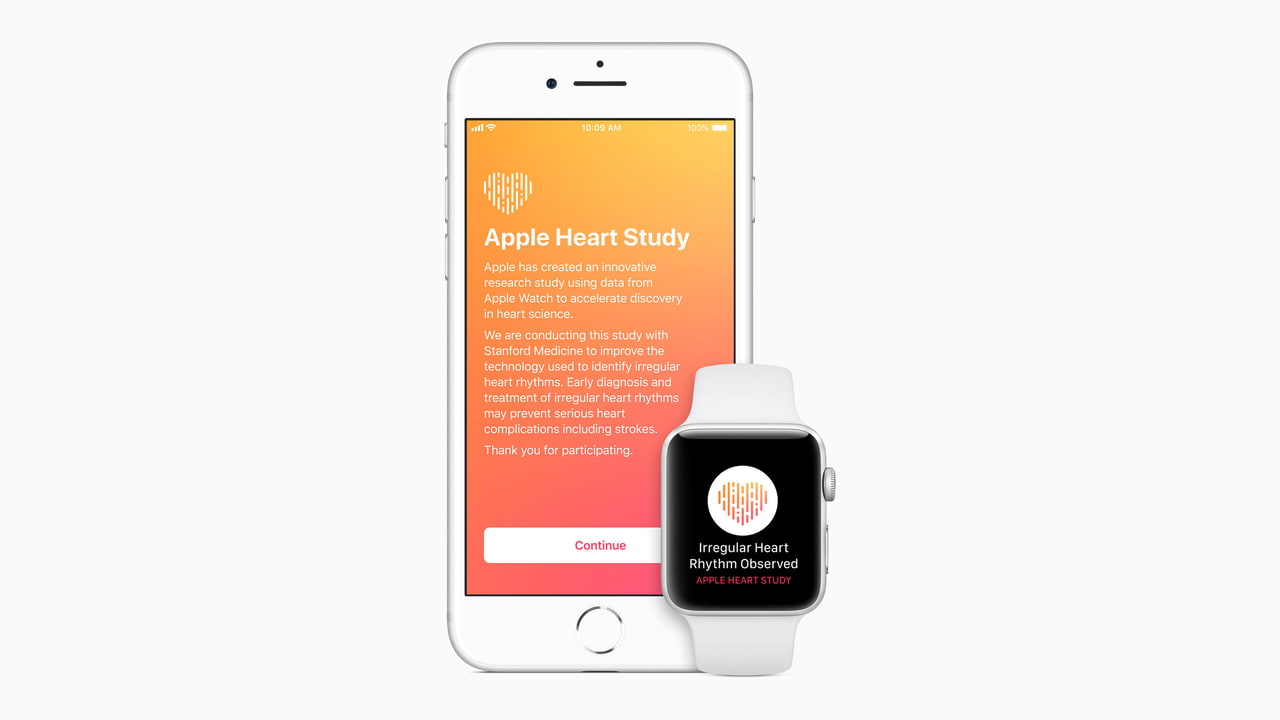

 Stanford Medicine announced results of the Apple Heart Study today, the largest ever study of its kind with over 400,000 participants.
Apple and Stanford created the study to evaluate Apple Watch’s irregular rhythm notification, which occasionally checks the heart's rhythm in the background and sends a notification if an irregular heart rhythm appears to be suggestive of atrial fibrillation (AFib). As part of the study, if an irregular heart rhythm was identified, participants received a notification on their Apple Watch and iPhone, a telehealth consultation with a doctor and an electrocardiogram (ECG) patch for additional monitoring.
“We are proud to work with Stanford Medicine as they conduct this important research and look forward to learning more about the impact of Apple Watch alongside the medical community,” said Jeff Williams, Apple’s COO. “We hope consumers will continue to gain useful and actionable information about their heart health through Apple Watch.”

Share Article:
Facebook, Twitter, LinkedIn, Google Plus, Email, Reddit, Digg, Delicious, StumbleUpon
Follow iClarified:
Facebook, Twitter, LinkedIn, Google Plus, Newsletter, App Store, YouTube

Post a Comment